How to Clean Area Rugs at Home Without Damaging Them
Area rugs are fantastic design elements that add warmth, color, and texture to any room. However, because they sit in the path of daily foot traffic, pets, and accidental spills, they inevitably get dirty. Unlike wall-to-wall carpets, which are securely attached to the floor, area rugs are mobile, allowing you to clean them thoroughly at home. But cleaning an area rug without causing damage requires care. Rugs are made from various fibers, some of which are delicate and prone to shrinking, color bleeding, or texture distortion. Understanding how to handle your rugs safely is key to keeping them looking beautiful for years.
Identify Your Rug's Fiber and Construction
Before applying any water or cleaning solution, you must determine what material your rug is made of. Synthetic rugs, made from fibers like polypropylene, nylon, or polyester, are highly durable and resistant to water and staining, making them the easiest to clean at home. Cotton and cotton-blend rugs are also easy to handle, and smaller ones can even be washed in a household washing machine on a gentle cycle. Wool rugs are durable but require specialized, pH-neutral wool cleaners, as harsh chemicals or hot water will shrink the fibers and strip natural oils. Delicate materials like silk, viscose, and art-silk should never be cleaned with water at home, as liquid can permanently ruin their sheen and pile; these should always be handled by professionals. Natural fiber rugs like jute and sisal are highly sensitive to moisture and will warp or rot if saturated, so they must only be cleaned using dry methods or minimal damp blotting.
Step 1: Thorough dry soil removal
The most critical step in rug cleaning is removing loose dirt, dust, and debris. If you apply liquid to a dusty rug, you will create a muddy paste that sinks deep into the fibers, making it much harder to clean. Take the rug outside and hang it over a sturdy clothesline or deck railing. Use a rug beater or a clean broom to beat the rug, releasing the embedded dust. If you cannot take it outside, vacuum the rug thoroughly on both sides. Use a vacuum cleaner without the beater bar active, especially on hand-tufted or delicate rugs, to avoid pulling the fibers or damaging the weave. Be sure to vacuum the back of the rug first, as this helps push trapped grit to the surface, then vacuum the front side.
Step 2: Test for Colorfastness
Dye bleeding is a common and irreversible issue when washing rugs. To check if your rug's dyes are stable, mix a small amount of your intended cleaning solution with cool water. Choose a small, inconspicuous spot on the rug, such as a corner or a pattern edge on the back. Dampen a clean, white cotton cloth with the mixture and press it firmly onto the test area for thirty seconds. Check the white cloth; if any color transfers to it, the dyes are unstable. In this case, do not wash the rug with water at home, as the colors will bleed and ruin the pattern. If the cloth remains clean, you can proceed with the cleaning process.
Step 3: Gentle Washing and Cleaning Solutions
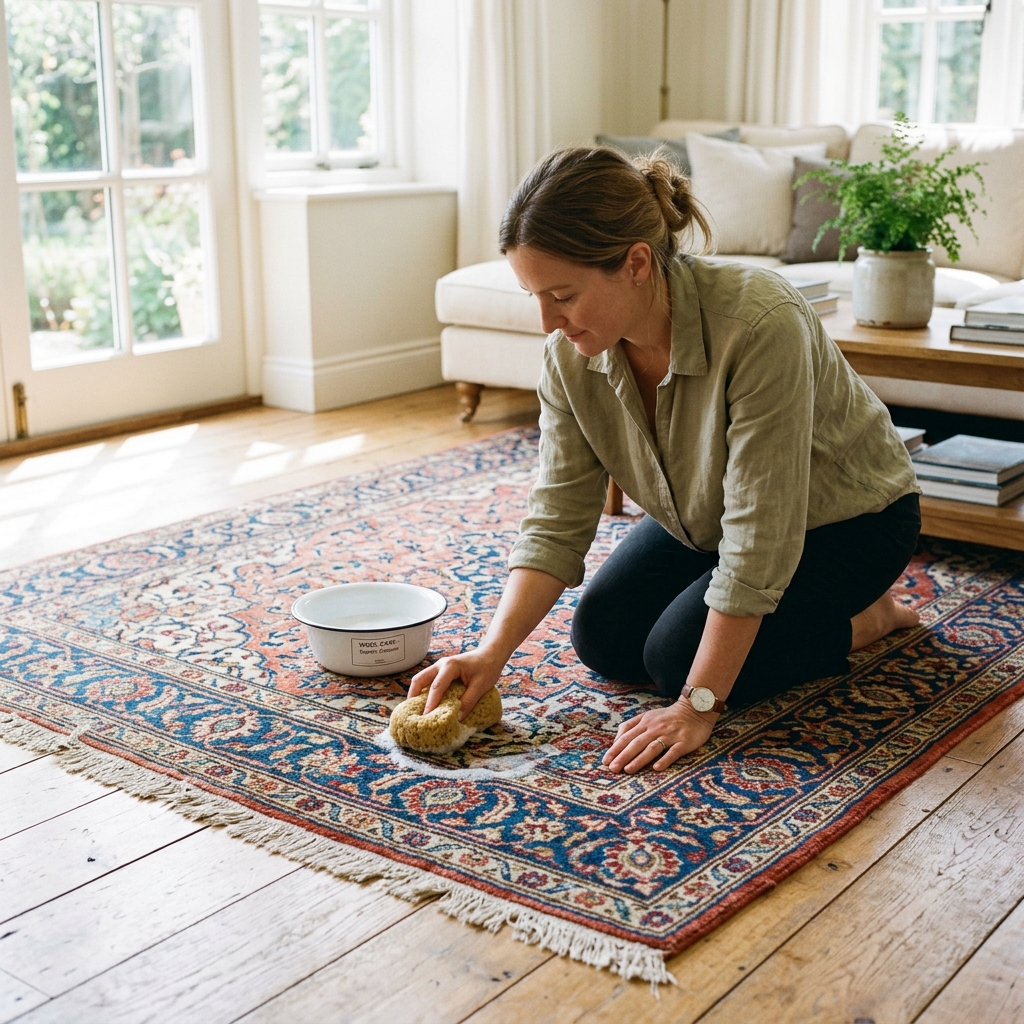
For a safe, mild cleaning solution, mix a few drops of gentle, clear dishwashing liquid or specialized rug shampoo into a bucket of cool water. Do not use laundry detergents, ammonia, or bleaches, as they are too harsh for rug fibers. Lay the rug flat on a clean concrete patio or a clean tarp. Dip a soft-bristled brush or a clean sponge into the soapy water and work it gently into the rug's pile, moving in the direction of the fibers. Focus on stained or heavily soiled areas, but avoid scrubbing vigorously, as this can fray the fibers and distort the rug's texture. Keep the application of water controlled; do not soak the rug unless it is a synthetic outdoor rug designed to handle heavy water.
Step 4: Rinsing and Water Extraction
After cleaning the surface, it is essential to rinse out the soap completely. Any soapy residue left behind will act as a dirt magnet, attracting dust and causing the rug to soil quickly after it dries. Use clean, cool water to rinse the rug, scrubbing gently with a clean sponge to flush out the soap. To extract the water, use a clean window squeegee or a dry towel, scraping or pressing in the direction of the pile to squeeze out excess moisture. Removing as much water as possible is critical, as a wet rug can develop musty odors, mold, or structural damage if it stays wet for too long.
Step 5: Proper Drying Techniques
Drying your rug correctly is just as important as washing it. Lay the rug flat in a clean, dry area away from direct sunlight, which can fade the colors, and away from direct heat sources, which can shrink the fibers. If possible, elevate the rug on sawhorses or grids to allow air to circulate beneath it. Use fans and dehumidifiers to speed up the process. Once the top is dry, flip the rug over to ensure the backing dries completely. Do not walk on the rug or place furniture back on it until it is completely dry. Once dry, use a soft brush or a vacuum on a low setting to gently groom the fibers and restore the rug's soft texture.
Special Considerations for Fringe Care and Maintenance
The fringe of an area rug requires extra care. It is often made of cotton warp threads that run through the entire length of the rug. Vacuuming the fringe with a standard rotating brush can quickly tangle, fray, or tear it off completely. When cleaning the fringe, use a mild solution of white vinegar and water to help lift dirt and whiten the cotton fibers naturally without harsh bleaching. Gently brush the fringe outward with a soft comb or soft-bristled brush, and let it dry flat. Avoid using heavy detergents on the fringe, as they can weaken the threads and lead to premature wear or detaching from the rug body.
Understanding the Risks of Over-Wetting Rugs
One of the most common causes of rug damage during home cleaning is over-wetting. Saturating a rug with excessive water can cause the backing material to separate from the face fibers, a condition known as delamination. Additionally, if the cotton warp threads stay wet for more than twenty-four to forty-eight hours, they can develop dry rot, which degrades the structural strength of the rug, making it brittle and prone to ripping. Saturated backing also traps moisture against hard subfloors, potentially warping hardwood or ruining laminate beneath. Keeping your cleaning damp and extracting as much water as possible is crucial to prevent these severe, irreversible issues.
By taking your time, selecting the correct cleaning solutions, and ensuring thorough drying, you can safely clean most synthetic and cotton area rugs at home. However, remember to leave high-value, antique, or delicate silk and wool rugs to professional care to prevent damage.